
If you want a cannabis strain that feels bright and active rather than heavy, start with sativa or sativa-dominant flower. Strains such as Sour Diesel, Jack Herer, Green Crack and Durban Poison are the ones most often described as energizing. Your result still depends on dose, tolerance and setting, so the best pick is the one you match to your own routine and start low with.
This guide covers the strains people name most, what the evidence says about sativa and energy, how to read a product page, and how to use daytime cannabis responsibly in Canada.
TL;DR
- Sour Diesel, Jack Herer, Green Crack and Durban Poison are the classic names listed as energizing in a 2026 strain guide.
- In a 2021 survey, 54% of people who had used both types felt energized after sativa, against 3% after indica.
- The sativa label is only a rough guide. Look at the THC percentage, the terpene notes and the format, not the label alone.
- Higher THC raises the chance of anxiety and paranoia, so start with a small amount and never drive after using.
Table of Contents
- Why sativa has a reputation for energy
- What the label does and does not tell you
- Sativa strains commonly described as energizing
- Sativa for creativity: what the research says
- How to choose a sativa for daytime energy
- Flower, vape or edible: which suits an energetic day
- Can sativa make you tired, anxious or impaired?
- Using daytime cannabis safely in Canada
- Our perspective
- Shop energizing flower and vapes online
- FAQ
- Sources
Why sativa has a reputation for energy
For decades, consumers have sorted cannabis into sativa (uplifting, daytime), indica (relaxing, evening) and hybrid (somewhere between). The sativa end of that scale is where people look when they want to stay alert, social or productive.
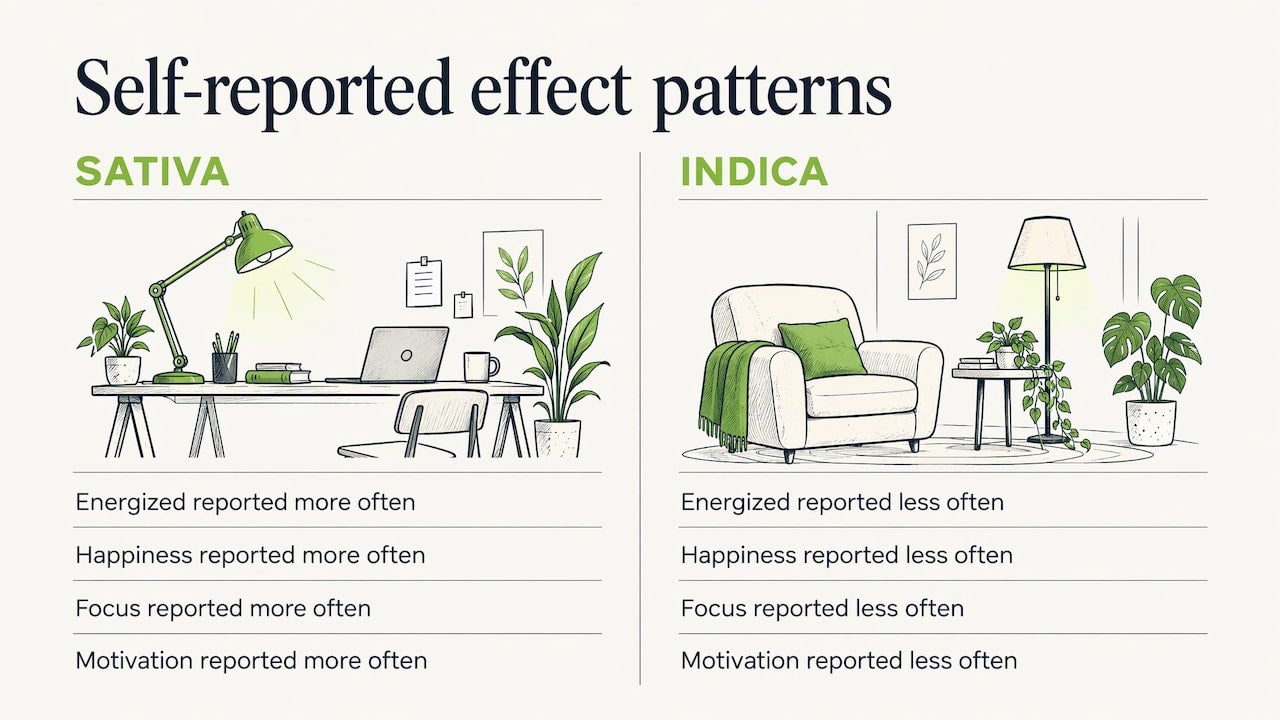
The reputation shows up in real survey data. In a 2021 survey of people who had used both types, respondents more often reported feeling energized after sativa than after indica. They also more often reported happiness, focus, motivation and alertness. Most said their usual effects were often or always consistent.
The same survey found people also reported paranoia or anxiety more often after sativa. These are self-reported associations, not proof that every sativa product causes a given effect. That is useful to know before you buy: an energizing strain is also a stimulating one, and some people find that too much.
If you want the background on the three categories, our guide on sativa, indica and hybrid differences goes through them in plain terms.
What the label does and does not tell you
A 2026 systematic review in the Journal of Cannabis Research found limited agreement between the indica, sativa and hybrid labels and a plant’s genetics or main cannabinoid profile. Terpene findings were inconsistent, and so were links to human outcomes. Its conclusion is practical: measured chemistry, how you consume, your dose and your own safety factors are more dependable than the label by itself.
For a shopper, that means the label is a starting point and these details finish the job:
- THC percentage and CBD content. These set how strong the product is.
- Terpenes. These are the aroma compounds in cannabis. Citrus, pine and sharp, fuel-like notes are common in strains people call uplifting.
- Format. Flower, vape cartridge and edible all act at different speeds.
- User ratings. Other buyers’ notes on how a strain felt in daytime use help you narrow the list.
Healthline’s guide adds that physiology, tolerance, life experience and setting can change the result. Two people can use the same strain and describe it differently.
Sativa strains commonly described as energizing
The strains below are the ones that appear again and again in daytime lists. The THC ranges come from Healthline’s 2026 guide and describe typical reported ranges, not the figure on any particular product. Always check the lab results on the product you are buying.
| Strain | Reported THC | Commonly associated with |
|---|---|---|
| Sour Diesel | 17–26% | Energizing |
| Jack Herer | 15–24% | Energizing |
| Green Crack | 15–25% | Energizing |
| Durban Poison | 17–26% | Energizing, creativity |
| Super Silver Haze | 18–23% | Creative, calm |
| Strawberry Cough | 17–23% | Happiness, euphoria |
| Chocolope | 16–23% | Slightly more relaxed effects |
Source for the table: Healthline, 12 Sativa Strains for Energy, Focus, Creativity, and More.
Sour Diesel, Jack Herer and Green Crack
These three are the usual answer when someone asks for the best sativa for energy. They sit in a similar potency range and are all described as energizing. Sour Diesel is known for a pungent, fuel-like aroma. Jack Herer has an official site that lists a family of related cultivars, including Original Jack, Haze Weaver and Sweet & Sour Jack, so the name can cover more than one product. Green Crack has the shortest name for the job: people reach for it when they want a morning or early-afternoon lift.
Durban Poison
Durban Poison is the strain many people call a pure sativa and a classic wake-and-bake choice. One breeder describes it as a 100% sativa F1 hybrid stabilized from South African landrace genetics, reported as creative, energetic and uplifting with a pine, spicy and sweet taste. That page is a seed listing from the US market and describes the breeder’s own cultivar. The strain’s home region is also working on formal origin protection: a South African co-operative says it is formalizing Durban Poison’s GI and PDO status. In practice, that means the name on a Canadian product page can refer to a variety grown from the original genetics, not to South African-grown flower.
Super Lemon Haze
Super Lemon Haze is a citrus-forward favourite. High Times describes it as a Green House Seed Company cross of Lemon Skunk and Super Silver Haze, and says it is especially associated with limonene and terpinolene. Those are the terpenes behind its bright, lemony smell.
Acapulco Gold and White Widow
Acapulco Gold is a long-standing sativa name. One consumer-profile site reports it at 20% THC and 0.5% CBD with uplifted, energized and euphoric effects. That is a user-reported profile, so treat it as a guide to what people say, not a lab finding. White Widow is a different case: it is usually described as a balanced hybrid, reportedly a cross of a Brazilian sativa and a South Indian indica, and it fits people who want lift without a very racy feel.
Strawberry Cough for a happy, giggly mood
If you are searching for a strain that lifts mood more than it drives activity, Strawberry Cough is the one commonly associated with happiness and euphoria, at 17–23% THC. As with all strains, the experience varies from person to person.
Sativa for creativity: what the research says
Many people who search for energizing sativas also want something for creative work. The research is more cautious than the strain lists.
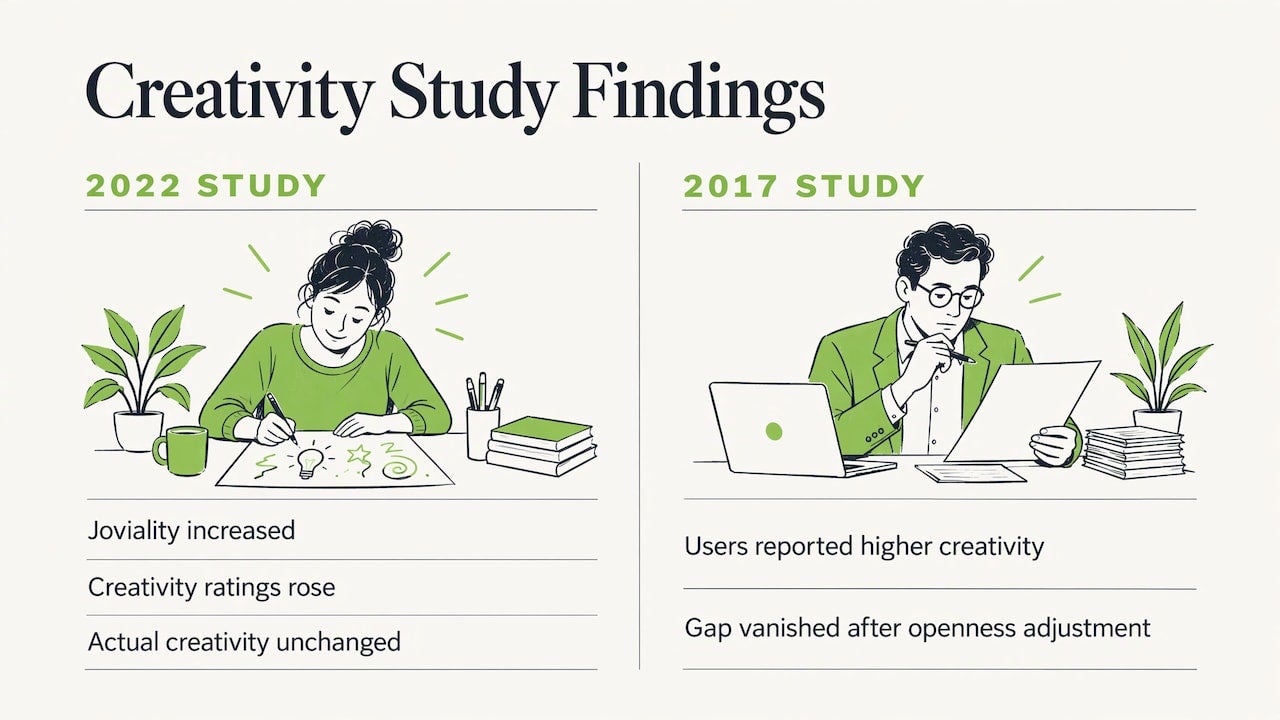
A 2022 experiment found that cannabis use increased joviality and made people rate their creativity more favourably, but it did not increase actual creativity. An earlier 2017 study found that sober cannabis users reported higher creativity than non-users, but the differences disappeared once greater openness to experience was taken into account.
The practical reading: an uplifting strain can make a creative session feel more enjoyable and open. It will not do the work for you. If you try one for creative time, keep the dose small enough that you can still focus on the task.
How to choose a sativa for daytime energy
Use these steps to narrow a long catalogue to one or two products.
- Decide what kind of energy you want. Alert and focused, social and talkative, or simply in a better mood. Sour Diesel and Jack Herer lean to the first, Strawberry Cough to the third.
- Pick a moderate THC level. Health Canada notes that cannabis products vary greatly in THC and that higher potency is strongly related to more acute and long-term problems. Products with high CBD to THC ratios typically carry less severe health risks. Our explainer on the difference between THC and CBD shows how the two work together.
- Read the terpene notes. Citrus, pine and sharp aromas are common among strains described as uplifting.
- Check ratings and photos. Buyers’ comments tell you whether a strain suited daytime use.
- Choose a format that fits the day. Flower and vape cartridges act quickly. Edibles take far longer, covered below.
- Start with a small amount and wait before you take more.
For a wider look at how to match a strain to a goal, see our guide to finding the right cannabis strain.
Flower, vape or edible: which suits an energetic day
The format changes how quickly and how long a strain acts, which matters when you want to stay active during the day.
- Flower. The classic way to compare strains, because each flower is sold under its strain name. Health Canada advises avoiding smoked burnt cannabis and recommends safer methods such as vaporizers, e-cigarette devices and edibles. If cannabis is smoked, avoid deep inhalation and breath-holding.
- Vape cartridges. Convenient, quiet and quick. Our guide to vape carts in Vancouver explains what to look for, and the piece on whether vaping is more discreet than smoking covers the low-smell advantage.
- Edibles. Health Canada says eaten or drunk cannabis can take up to two hours to begin and up to four hours to reach full effects, with effects lasting up to 12 hours and residual effects up to 24. That is a long tail for a daytime plan, so most people who want a clear afternoon choose inhaled formats. Our indica vs sativa edibles guide goes further if you prefer edibles.
Can sativa make you tired, anxious or impaired?
Yes, it can, and knowing why helps you avoid it.
The main factor is dose. Health Canada’s information for health care professionals describes a dose-dependent, two-way effect of THC on anxiety and mood: low doses appear to lift mood and ease anxiety, while high doses can produce anxiety and lower mood. A high-THC sativa taken in a large amount can therefore feel jittery instead of bright. Health Canada’s warnings effective March 12, 2025 also state that higher THC increases the risk of adverse effects, including paranoia, anxiety and dependence.
Other factors that shape the experience:
- Tolerance. Regular users need more for the same effect, and new users need much less.
- Setting and mood. A calm, familiar place usually suits uplifting strains better than a crowded or stressful one.
- Sleep, food and caffeine. A tired, hungry or already caffeinated body reacts differently.
- Format. Edibles taken in repeat doses before the first one has landed are a common cause of a bad time.
Feeling sleepy after an energizing strain is also possible, since individual reactions vary, as the Healthline guide notes. If a strain makes you tired or edgy, try a lower dose or a different strain, and speak to a doctor or pharmacist if you have a heart condition, a mental health condition or take other medication.
Using daytime cannabis safely in Canada
An energetic feeling is not the same as being unimpaired. Keep these rules in mind.
- Do not drive or operate machinery. Health Canada recommends waiting at least six hours after use, and its warnings tell people not to drive under the influence of cannabis.
- There is no safe waiting time. British Columbia’s government says impairment is subjective, may not match THC levels, and that you can feel fine while still impaired. If you will be driving, plan not to use.
- Go slowly with edibles. Health Canada warns that taking more before you feel an effect can lead to cannabis poisoning, including severe anxiety and panic attacks.
- Keep use occasional. Health Canada’s lower-risk guidance says abstinence is the most effective way to avoid risks. If you do use, keep it occasional and choose lower-THC, higher-CBD options where you can.
Our perspective
We hear the same request from many customers: something bright for the day that does not leave them wired. Our answer is to treat the sativa label as a starting point and read the rest of the product page before ordering.
That is why we show user ratings next to products and why we promise no filler. When you can see what other buyers say about a strain’s daytime feel, and you know what you are getting, choosing gets easier. We also offer flower, vapes, edibles and concentrates in one catalogue, so you can match the format to your day instead of settling for one.
Our advice for a first try is simple: pick one strain from the classic list, start with a small amount, and note how it feels at different times of day. Use that record to refine your next order. Discreet packaging and fast delivery across Canada mean you can restock without planning around a store visit.
the author
Shop energizing flower and vapes online
If you are ready to try a daytime strain, browse our flower, vape and edible categories and use the ratings to compare what other customers say about each product. Orders ship discreetly across Canada.

Buying in larger quantities? Our bulk category is the place to look, and the on sale page lists current promotions.
FAQ
Is sativa or indica more energetic?
Sativa is the one most people associate with energy. In a 2021 survey of people who had used both, 54% reported feeling energized after sativa and 3% after indica. Individual results still vary with dose, tolerance and setting.
Does sativa make you tired or give you energy?
Most people report energy, focus and a lifted mood, but the effect depends on the person and the dose. A very high dose can bring anxiety, and some people feel tired as the effect fades. Start with a small amount and see how you respond.
What is the most euphoric sativa strain?
Strawberry Cough is commonly associated with happiness and euphoria at 17–23% THC. Acapulco Gold and Durban Poison also appear on uplifting lists. How euphoric any strain feels depends on your own physiology and tolerance.
What is the best time of day to use an energizing sativa?
Most people choose morning or early afternoon, which keeps the effects away from bedtime. Inhaled formats act sooner than edibles, which can last up to 12 hours according to Health Canada. Do not drive after use.
Sources
- Healthline: 12 Sativa Strains for Energy, Focus, Creativity, and More
- Use Patterns, Beliefs, Experiences, and Behavioral Economic survey (PMC)
- Journal of Cannabis Research: indica, sativa and hybrid labels review
- Jack Herer: Strains
- Barney’s Farm: Durban Poison
- iNkosi yeSativa: Durban Poison Official
- High Times: 25 Greatest Strains of All Time
- CannaRadar: Sativa Strains
- PubMed: Cannabis use does not increase actual creativity
- PubMed: Inspired by Mary Jane?
- Health Canada: Lower-risk cannabis use guidelines
- Health Canada: Cannabis health warning messages
- Health Canada: New cannabis products video
- Health Canada: Information for health care professionals