
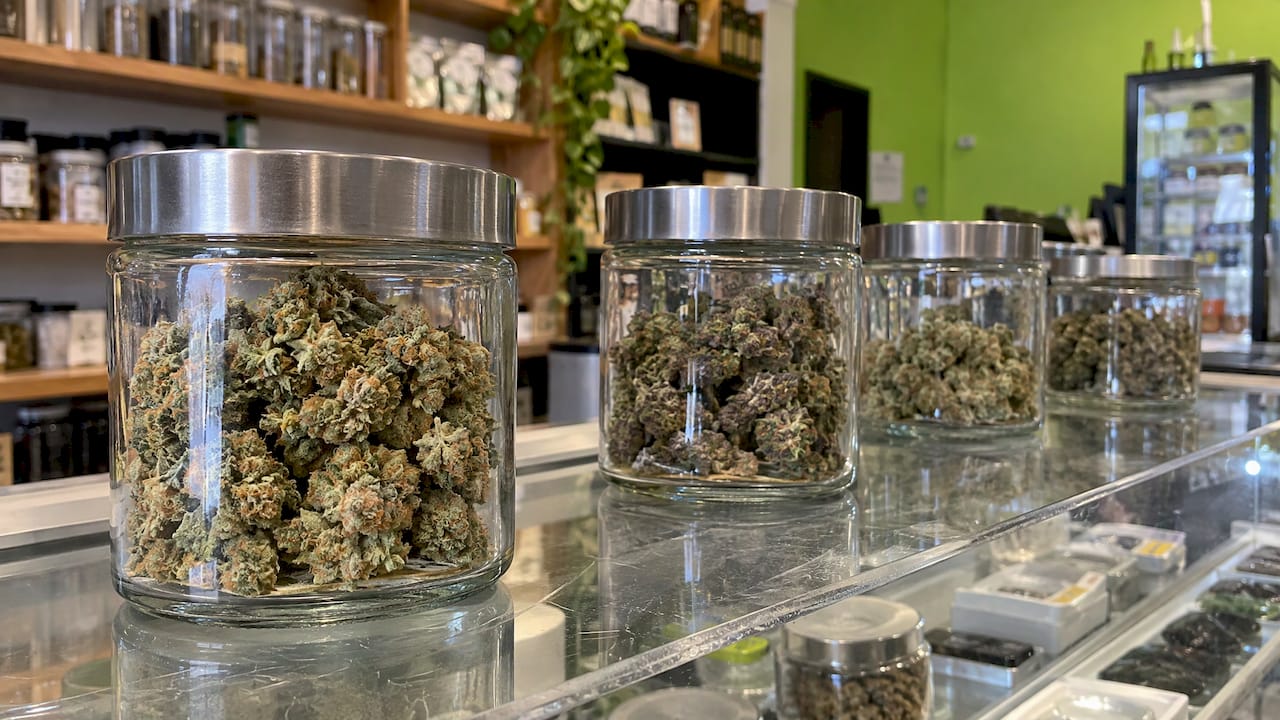
No single strain is proven best for pain. The most useful way to choose is to read the cannabinoid profile (THC and CBD), pick a format that matches when and how long you need relief, and start with a low dose. Health Canada says there isn’t enough scientific information to recommend a specific product for a specific condition, so finding what works is a process of trial and error for you and your health care provider. This guide explains what the research shows, which strains people commonly discuss, how edibles compare with inhaled products, and what to know about safety and delivery in Canada.
TL;DR
- Canadian guidelines support cannabinoid-based medicines for chronic pain, and the strongest evidence is for THC formulations, not CBD alone.
- Read the label first: THC and CBD percentages and the terpene list tell you more than a strain name does.
- Inhaled cannabis acts within minutes and lasts about 2 to 4 hours. Edibles take 30 minutes to 2 hours to start and can last 4 to 8 hours.
- Start low and go slow, especially with edibles. New users are advised to begin with no more than 2.5 mg of THC.
- Talk to a doctor or pharmacist before using cannabis for pain, particularly if you take other medications.
Table of Contents
- What the evidence says about cannabis and pain
- How to read a strain: THC, CBD and terpenes
- Strains people commonly discuss for pain
- Matching a profile to the kind of pain
- Flower, vapes or edibles: onset and duration
- Cannabis edibles and CBD edibles for pain
- Safety: side effects and who should ask first
- Perspective
- Cannabis delivery in Canada
- Shop for pain-friendly formats at East Van Buds
- FAQ
- Sources
What the evidence says about cannabis and pain
Health Canada describes the research as limited. It suggests cannabis might relieve chronic non-cancer pain, mainly neuropathic pain, as well as pain and muscle spasms from multiple sclerosis and severe cancer pain that does not respond to conventional treatment.
The 2024 Canadian clinical practice guidelines, published in CMAJ, go further. They make a strong recommendation, based on moderate-quality evidence, for cannabinoid-based medicines in people living with chronic pain, including central and peripheral neuropathic pain. These can be used alone, as a replacement or as an add-on to other treatment.
Two details from those guidelines matter when you shop:
- The strongest evidence for reducing chronic pain symptoms is for THC formulations rather than CBD.
- Most adverse events are linked to THC, and a CBD-dominant product can be combined with THC to soften side effects.
The size of the benefit is modest on average. A 2021 BMJ meta-analysis of 32 trials and 5,174 patients found that non-inhaled medical cannabis probably gives a small increase in the share of patients who reach a minimally important pain improvement, with a modelled difference of 10%. It also found a small improvement in sleep quality.
Many Canadians already use cannabis this way. The Canadian Centre on Substance Use and Addiction reports that about 13% of people in Canada use cannabis for medical purposes, and that pain appears to be the most common medical reason, with most of those users reporting it helps.
How to read a strain: THC, CBD and terpenes
A strain name is a starting point. Two jars with the same name can differ in potency and aroma, so the lab information on the label is the better guide.
THC and CBD
The cannabis plant contains more than 100 cannabinoids. The two best known are THC and CBD. According to Health Canada, CBD doesn’t cause a “high” and isn’t addictive, while THC can impair, cause a high and lead to addiction. If you want a deeper comparison, our guides explain what CBD and THC are and how they differ.
In practical terms:
- THC-dominant: the profile with the strongest clinical evidence for chronic pain, and the one most likely to cause drowsiness, dizziness or a head high.
- Balanced THC:CBD: a middle path. CBD may help temper some THC side effects.
- CBD-dominant: no intoxicating effect from CBD itself, often chosen for daytime use or for inflammation-type pain.
Terpenes
Terpenes are the aromatic compounds in cannabis. Leafly lists caryophyllene, limonene and humulene as the main terpenes in Gelato, for example. Terpenes shape smell and flavour. The clinical guidelines above are built around THC and CBD, so treat terpene claims about pain as interesting rather than settled.
Indica, sativa and hybrid
Many retailers and guides sort strains into indica, sativa and hybrid. Many pages that rank for this topic say indica types are often used for relaxation and muscle tension. That is a useful shorthand for how a product is commonly described, but Health Canada’s guidance centres on the cannabinoid content and the format, so use the label as your main guide.
Strains people commonly discuss for pain
Lists of the best strains for pain turn up the same names again and again: Gelato, Harlequin, Northern Lights, Granddaddy Purple, Blue Dream, Cherry Pie and others. These are popular choices, not clinically tested prescriptions. Two examples show how different the profiles can be.
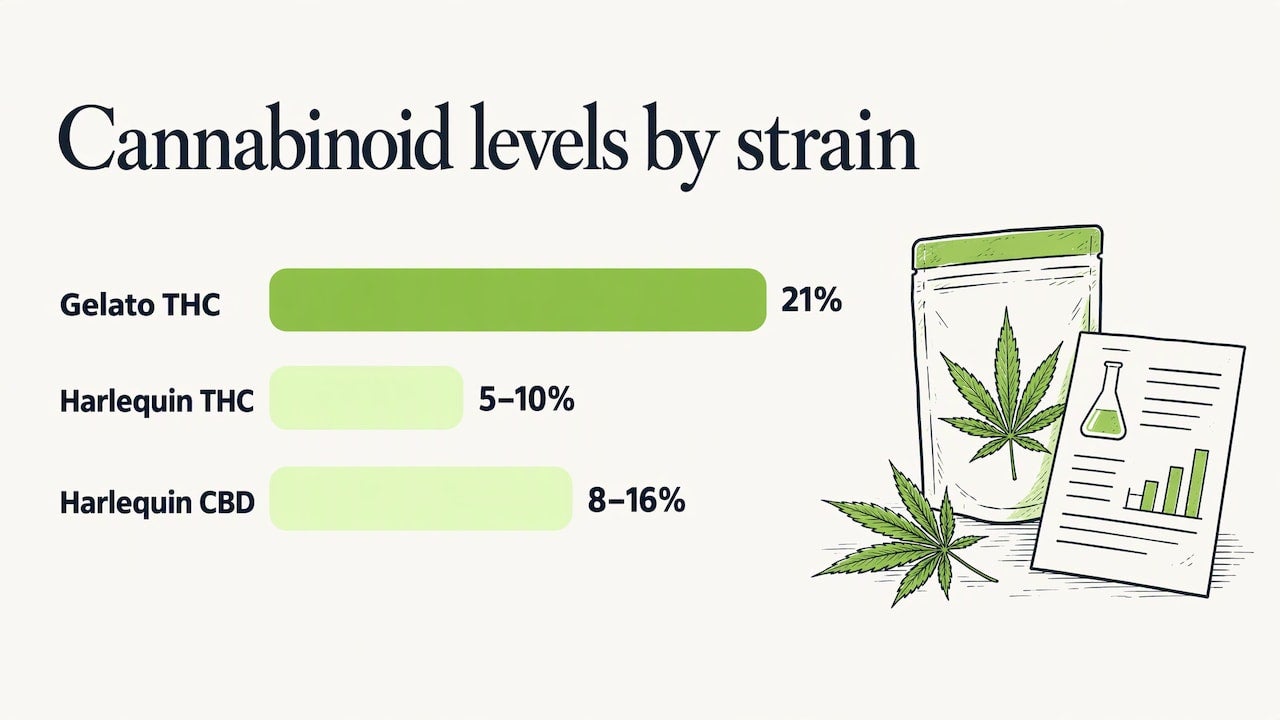
Gelato is a balanced hybrid, a cross of Sunset Sherbet and Thin Mint Girl Scout Cookies. Leafly lists its THC at about 21% and CBD at 0%, with relaxed and euphoric effects reported most often. That makes it a THC-forward profile.
Harlequin sits at the other end. It is generally described as a CBD-rich strain, with a THC range of about 5 to 10% and CBD of about 8 to 16%, roughly a 2:1 CBD to THC ratio. The same guide points out that not every product sold under the Harlequin name matches that profile, which is a good reason to read the lab results on each package.
| Profile | Typical example | What people often look for | Worth considering when |
|---|---|---|---|
| THC-forward | Gelato-type hybrids | Stronger relief, relaxation, sleep | Pain is persistent and evenings are the hardest |
| Balanced THC:CBD | Many hybrids and oil extracts | Relief with a gentler head effect | You are newer to THC |
| CBD-dominant | Harlequin-type, CBD oils | Daytime use, inflammation-type pain | You want to avoid a high |
The table is a way to organize options, not a prescription. Health Canada’s position is that no product can yet be recommended for a given condition, so use it to start a conversation with your pharmacist or doctor.
Matching a profile to the kind of pain
Research gives a few anchors.
- Neuropathic (nerve) pain: the condition with the most consistent support. The CAMH guide for pharmacists reports limited to moderate clinical evidence for neuropathic pain and for pain and spasticity in multiple sclerosis. The CMAJ guidelines point to THC formulations as having the strongest evidence.
- Inflammatory pain such as arthritis: the Alberta Medical Association suggests that for inflammation like arthritis, a more CBD-predominant product at a dose of at least 5 mg CBD can be considered. Arthritis Canada’s guide advises starting at a low dose and using CBD-based products to avoid THC side effects.
- Breakthrough pain: the CMAJ guidelines limit inhalation to vaporized dried flower rather than combustion, because of its rapid onset and shorter duration.
- Nighttime pain: the same guidelines note oral products may suit evenings because they last longer (6 to 8 hours) and cause somnolence.
Flower, vapes or edibles: onset and duration
The format often matters as much as the strain. Health Canada’s guidance gives these timings:
| Format | Effects start | Strongest effects | Typical duration |
|---|---|---|---|
| Smoked or vaped | Seconds to minutes | Soon after inhaling | About 2 to 4 hours |
| Eaten or drunk (edibles, oils, tinctures) | 30 minutes to 2 hours | 2 to 4 hours after | About 4 to 8 hours |
These figures come from Health Canada’s guidance on using a cannabis product, which adds that timing depends on the product, other oral medications and food in the stomach.
The CMAJ guidelines say that adverse effects from combustion and second-hand smoke make smoked cannabis less favourable than vaporizing. If you inhale, a vaporizer or vape cartridge avoids burning plant material. Our vape and flower categories are on the East Van Buds shop.
Cannabis edibles and CBD edibles for pain
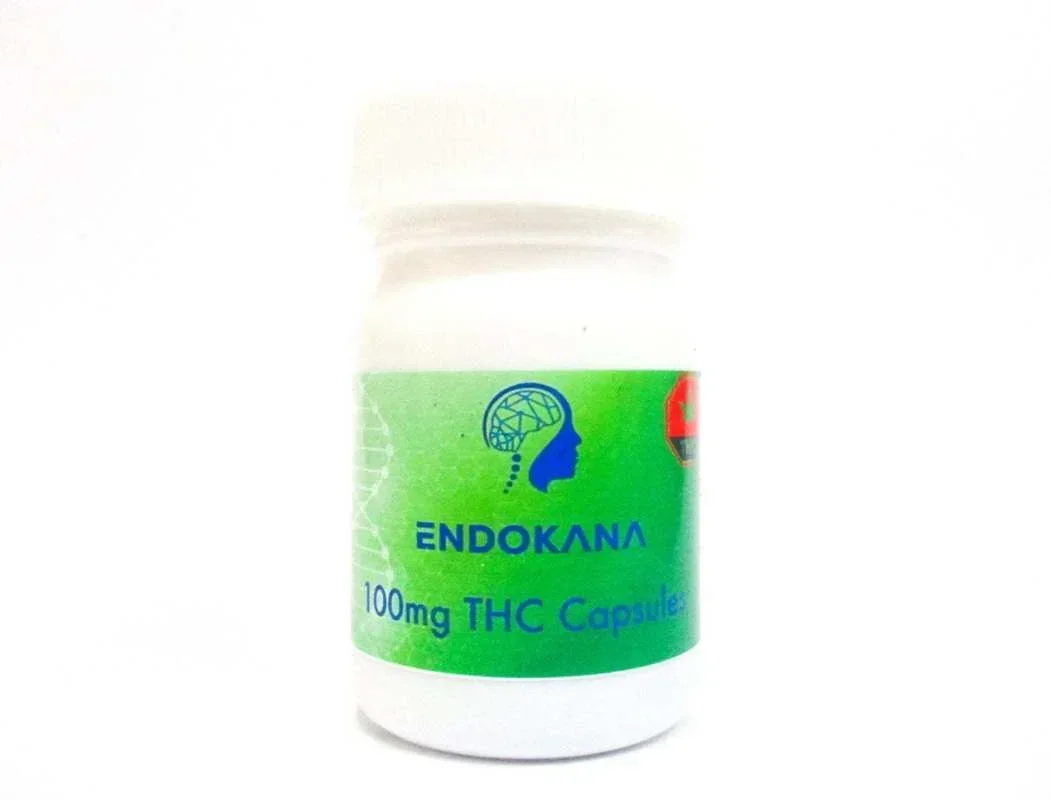
Edibles are popular for pain because relief lasts longer and there is nothing to inhale. The guidelines note that oral oils and capsules are easier to dose accurately in milligrams than inhaled products. That precision is useful when you are trying to find the lowest effective dose.
Dosing and patience
The main risk with edibles is taking more before the first dose has worked. Arthritis Canada notes that because of the delay, some people take too much because they think the first dose didn’t work. The CCSA says it can take up to four hours to feel the full effects, that the effects can last up to 12 hours, and that new users should start with no more than 2.5 mg of THC.
A simple routine:
- Choose a product with a clear THC and CBD content per serving.
- Take a low dose, such as 2.5 mg of THC, and note the time.
- Wait at least two hours, and longer if you can, before deciding whether you need more.
- Increase slowly across days, not within one evening.
- Keep a short log of dose, timing, pain level and side effects to share with your care provider.
The Alberta Medical Association’s approach for symptom management is similar. It suggests starting with a balanced THC:CBD oil extract at 2.5 mg of the THC component sublingually, up to every four hours.
What CBD edibles can and cannot do
CBD products do not cause a high, which is why many people try them first. The research summarised above puts the strongest pain evidence on THC, so CBD-dominant products are best seen as one option, particularly for inflammation-type pain, and as a way to pair with THC. If you take CBD regularly, the CMAJ guidelines note it can be associated with raised liver enzymes, mostly at very high doses (800 mg a day), and recommend periodic liver enzyme monitoring and avoiding excessive alcohol.
For background on how the two compounds compare in food and drink, see our guide to CBD and THC infused treats. If you prefer measured oral doses, our tinctures and capsules are easier to portion than most gummies, and our cannabis oil guide covers dosage and safety in more detail.
Package limits
Legal edible cannabis in Canada contains no more than 10 mg of THC per package and must come in plain, child-resistant packaging. Store edibles out of reach of children and pets.
Safety: side effects and who should ask first
Cannabis for pain works for some people and causes side effects in others. Knowing what to expect makes it easier to use well.
- THC-related effects: the CMAJ guidelines list dizziness, cognitive impairment, dry mouth, fast heart rate, anxiety, drowsiness and fatigue. They also note an association between cannabis use and psychosis in susceptible people.
- Oral products: the BMJ analysis found increased dizziness, drowsiness, nausea and transient cognitive impairment with oral medical cannabis.
- Over-intoxication from edibles: eating more within the first four hours can lead to severe anxiety, panic, nausea and vomiting, according to the CCSA.
- If side effects appear: the guidelines suggest a clinician can adjust the strain toward higher CBD and lower THC, lower the dose or change the route. Adverse effects generally subside within 48 hours or when titration stops.
See a doctor or pharmacist before starting if you have heart disease, a personal or family history of psychosis, or take other medications. The CAMH guide notes that pharmacists are well placed to assess the benefits and harms of cannabis use. Health Canada also stresses regular follow-up appointments with a health care provider to decide whether to change how much you use. Do not drive or operate machinery while impaired. Arthritis Canada also points out that most cannabis products in Canada have not met the standard for marketed drugs, which is another reason to buy only from licensed sellers and to read labels.
Older adults deserve extra care with dose and timing. Our guide on cannabis for seniors goes through it.
Perspective
At East Van Buds, we see the same pattern with customers looking for pain relief: they arrive with a strain name and leave better served by a label. We think the cannabinoid content per package, the format and the dose do more for you than a famous name.
That is why we organize our catalogue by format, with flower, edibles, vapes, concentrates, CBD and topicals, and show user ratings so you can see how other buyers found a product. Our approach is no filler and no shortcuts, rooted in West Coast cannabis culture.
For people who want a measured, longer-lasting option, we point them to our THC tinctures and capsules, where each dose is easy to portion. For people who prefer inhaling, we suggest starting small and giving each draw time to work. Whatever you choose, we encourage you to keep a short dose log and share it with your pharmacist or doctor.
the author
Cannabis delivery in Canada
Cannabis rules are set federally and by each province or territory, so delivery details depend on where you live. Provinces can change their own rules. Ontario, for example, amended its cannabis retail regulation in 2026 through O. Reg. 125/26, which adjusts the hours rules for retail stores and for delivery, including delivery between 9 a.m. and 11 p.m. while the store is open. Check your own province’s regulator for current age limits, ID checks and delivery hours before you order. You must be of legal age in your province to buy cannabis, and you will need to show it.
Shop for pain-friendly formats at East Van Buds
If you are ready to try a format with measured doses, we carry THC tinctures and capsules, including the Endokana THC capsules and the Endokana THC tincture (2000 mg). We also stock flower, vapes, concentrates, CBD and topicals, accessories and bulk, all ordered online with discreet delivery across Canada.
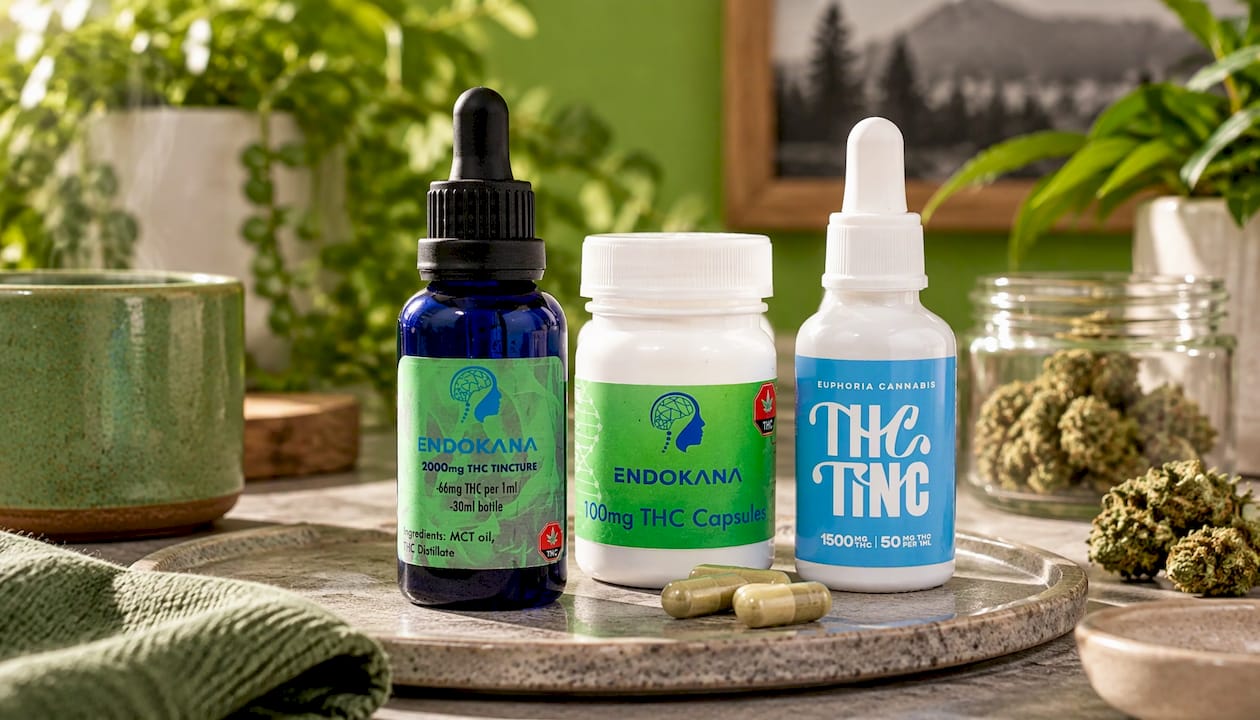
Browse the full catalogue on the East Van Buds homepage and use the user ratings and mix-and-match bundles to build an order that suits your needs.
FAQ
What type of cannabis is best for pain?
There is no single best type. Canadian guidelines show the strongest evidence for THC formulations in chronic pain, while CBD-dominant products are often considered for inflammation and for softening THC side effects. Health Canada says finding the right product is a matter of trial and error with a health care provider.
Are edibles better than smoking or vaping for pain?
They suit different needs. Edibles start in 30 minutes to 2 hours and can last 4 to 8 hours, which can suit steady or nighttime pain. Inhaled cannabis acts within minutes for about 2 to 4 hours. The CMAJ guidelines prefer vaporized flower over smoking when inhaling.
How much THC should I start with in an edible?
The CCSA advises new users to start with no more than 2.5 mg of THC and to wait before taking more, because the full effect can take up to four hours. Raise the dose gradually and talk to your pharmacist or doctor about your plan.
Do CBD edibles help with pain?
Some people find CBD products useful, especially for inflammation-type pain such as arthritis. The clinical evidence for chronic pain is strongest for THC, so CBD is often used alone for a gentler experience or alongside THC. Regular CBD users should ask about liver enzyme monitoring.
Sources
- Health Canada: Cannabis for medical purposes, general information
- Health Canada: Choosing a cannabis product
- Health Canada: Using a cannabis product
- Health Canada: Cannabis poisonings in children
- Clinical Practice Guidelines for Cannabis and Cannabinoid-Based Medicines, 2024 (CMAJ)
- Clinical Practice Guidelines for Cannabis and Cannabinoid-Based Medicines (2023 full text)
- BMJ 2021 meta-analysis of medical cannabis for chronic pain
- CAMH Cannabis Care Guide for Pharmacists
- CCSA: Medical Use of Cannabis and Cannabinoids, 2024
- CCSA: Edible Cannabis, Cannabis Extracts and Cannabis Topicals
- Arthritis Canada: Medical Cannabis & Arthritis guide
- Alberta Medical Association: Cannabis for symptom management
- Leafly: Gelato strain
- ZenWeedGuide: Harlequin strain
- Ontario: O. Reg. 125/26