
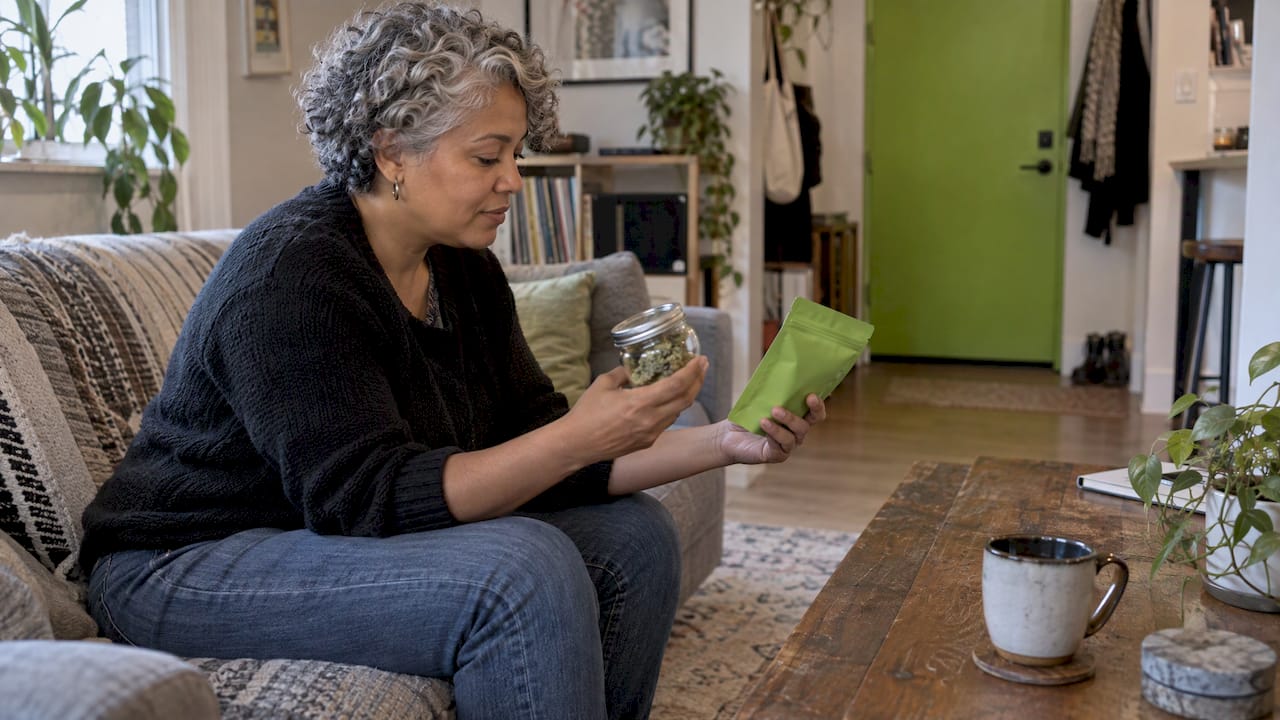
If you are new to cannabis, start with a product that is low in THC, take a very small amount and wait before you take more. Health Canada’s guidance points the same way: choose products with low THC and equal or higher CBD, and give each dose time to work. This guide covers what THC and CBD are, how to read a label, which first product suits you, how much to take and what to do if it goes wrong. You can then order from a Canadian retailer such as East Van Buds with a clear idea of what you are buying.
TL;DR
- THC causes the high. CBD does not, but it still affects the body. For a first try, pick low THC and CBD equal to or higher than the THC.
- Health Canada recommends 2.5 mg of THC or less for a first edible, and 1 or 2 puffs from a product with 10% THC or less.
- Edibles act slowly and last longest. Inhaled cannabis acts within minutes. Both need patience before a second dose.
- Read the label for total THC, CBD and the THC per unit, not just the package total.
- Adults 19 and older can buy in British Columbia. Do not mix cannabis with alcohol, and do not drive.
Table of Contents
- What cannabis does in the body
- Choose your first method
- How much should a beginner take?
- How to read a cannabis label
- Indica, sativa or hybrid: which should a beginner smoke?
- Set up your first session
- What to do if you feel too high
- Know the rules in Canada and British Columbia
- Keep it occasional
- Our perspective
- Order your first products from East Van Buds
- FAQ
- Sources
What cannabis does in the body
Cannabis contains compounds called cannabinoids. Two matter most to a beginner.
THC is the main compound that causes intoxication. Health Canada lists dry mouth, red eyes and a faster heart rate among its common effects. CBD does not produce a high, but it can still affect the brain and body, so it is not the same as “no effect”.
Your first experience depends on how much THC you take, how you take it, your body, what else you have consumed that day and your surroundings. That is why most good beginner advice is about dose and method, not about finding a perfect strain. If you want more background on the two compounds, our pages on the difference between THC and CBD and CBD and THC benefits and risks go deeper.
Common effects and unwanted effects
People commonly report relaxation, changes in mood and altered perception of time. Canadian public-health guidance also lists possible unwanted effects: rapid heart rate, dizziness, anxiety, disorganized thoughts, memory loss, nausea and vomiting. In serious cases it names psychotic episodes or seizures. Knowing this in advance is part of using cannabis safely: a small first dose keeps these effects less likely.
Choose your first method
How you consume cannabis changes how quickly it works and how long it lasts. The figures below come from Health Canada’s guidance.
| Method | When you feel it | Full effect | How long it lasts |
|---|---|---|---|
| Inhaled (smoked or vaporized) | Seconds to minutes | Up to 30 minutes | Up to 6 hours, residual effects up to 24 hours |
| Eaten or drunk (edibles) | 30 minutes to 2 hours | Up to 4 hours | Up to 12 hours, residual effects up to 24 hours |
Source: Health Canada, What you need to know if you choose to consume cannabis (2019).
Inhaled flower: fast feedback
Dried flower is the traditional choice. Because you feel it within minutes, it is easier to find your level, one small step at a time. You can pause between puffs and stop when you feel enough.

Edibles: slow and long
Gummies, chocolates and drinks are discreet and easy to portion, and there is no smoke or smell. The trade-off is timing. The Council of Chief Medical Officers of Health explains that swallowed cannabis can produce stronger and less predictable effects than inhaled cannabis, because the onset is delayed and people take a second dose too soon.
The rule for edibles is simple: take one small dose, then wait the full time window before you even think about more. Our guide to CBD and THC infused treats explains the options, and the edibles category shows what is available.
How much should a beginner take?
Health Canada gives specific numbers for new and occasional consumers.
- Edibles: choose a product with 2.5 mg of THC or less and wait for the effects before taking more. Full effects can take up to 4 hours.
- Inhaled: take 1 or 2 puffs initially from a product with 10% THC (100 mg/g) or less, then wait, because full effects can take up to 30 minutes.
Is a 10 mg edible too much for a beginner?
Yes, for a first try it is a lot. The Council of Chief Medical Officers of Health states that a package with up to 10 mg of THC can be a large amount for a first-time or infrequent consumer and recommends starting at 2.5 mg or less. Ten milligrams is four times that starting dose.
A worked example
Say you buy a pack of gummies. The front says 2.5 mg total THC per gummy and the pack has four. Health Canada uses exactly this case: four units could contain 10 mg of total THC in the whole package, so you must tell apart THC per unit from THC for the package.
- Eat one gummy, which is 2.5 mg.
- Note the time and do something calm.
- Wait at least two hours, and ideally up to four, before deciding anything else.
- If you feel fine and want more, take another half or whole unit only the next time you try it, not the same evening.
If the plan is to try the next step on a later day, you lose nothing and you avoid the most common beginner mistake.
How to read a cannabis label
Legal products sold in Canada must carry the same core information. According to Health Canada, labels must show total THC and CBD, the cannabis class, intended use, ingredients where applicable, storage conditions, a health warning and a standardized cannabis symbol when THC is above 10 micrograms per gram.
As a beginner, check these in order:
- Total THC. The first number to compare. Lower means a gentler experience.
- CBD. Equal to or higher than THC is Health Canada’s suggested direction for new users.
- Per unit or per package. For edibles, work out the single-serving dose.
- Product type. Flower, edible, drink and so on, each with its own timing.
- Storage and warnings. Keep products sealed and out of reach of children and pets.
An East Van Buds product page lists the product type and user ratings, which helps when you compare several options side by side.
Indica, sativa or hybrid: which should a beginner smoke?
This is one of the questions beginners ask most. Indica is commonly described as more relaxing, sativa as more uplifting and hybrid as somewhere between. Many shoppers use these words as a starting point, and retailers use them to sort their catalogues. Our guide to indica strains from BC shows how the terms are used in practice, and the comparison of indica and sativa edibles covers the same idea for edibles.
What the legal label does require, though, is the THC and CBD content. So for a first purchase, use the type as a loose guide to mood and let the THC number set the strength. A relaxing, lower-THC option is a sensible evening choice. A lighter, lower-THC option suits daytime, once you know how you respond.
If your goal is comfort rather than a strong high, read how to choose and use cannabis strains for pain, and if you are unsure whether you want a medical or recreational route, see the difference between medical and recreational cannabis.
Set up your first session
A good first session is less about the product and more about the conditions.
- Place: at home or somewhere you know and feel safe.
- Company: alone with a trusted person nearby, or with a friend who is also keeping it light.
- Timing: a day with nothing to do afterwards. Effects from edibles can last up to 12 hours.
- Supplies: water, a snack and a way to relax, such as music or a film you know.
- No mixing: Health Canada advises avoiding cannabis with nicotine, alcohol, other drugs or health products, because combining them can increase impairment and unwanted effects.
- No driving or cycling: plan to stay in until the effects have fully worn off.
If you take other medication or have a health condition, speak to your doctor or pharmacist before you try cannabis.
What to do if you feel too high
It happens to many new users, and it passes. Manitoba Health says that if you have taken too much but have no chest pain, seizures or loss of contact with reality, stay in a safe place, avoid driving or cycling and let the effects wear off. Drink water, sit somewhere comfortable and remind yourself that the feeling is temporary.
Chest pain, panic attacks or seizures need immediate medical attention. Health Canada also advises that if adverse effects occur you should stop using cannabis and contact a poison centre or call 911. If you do report a reaction, have the product name, company, lot number and THC and CBD details to hand.
Know the rules in Canada and British Columbia
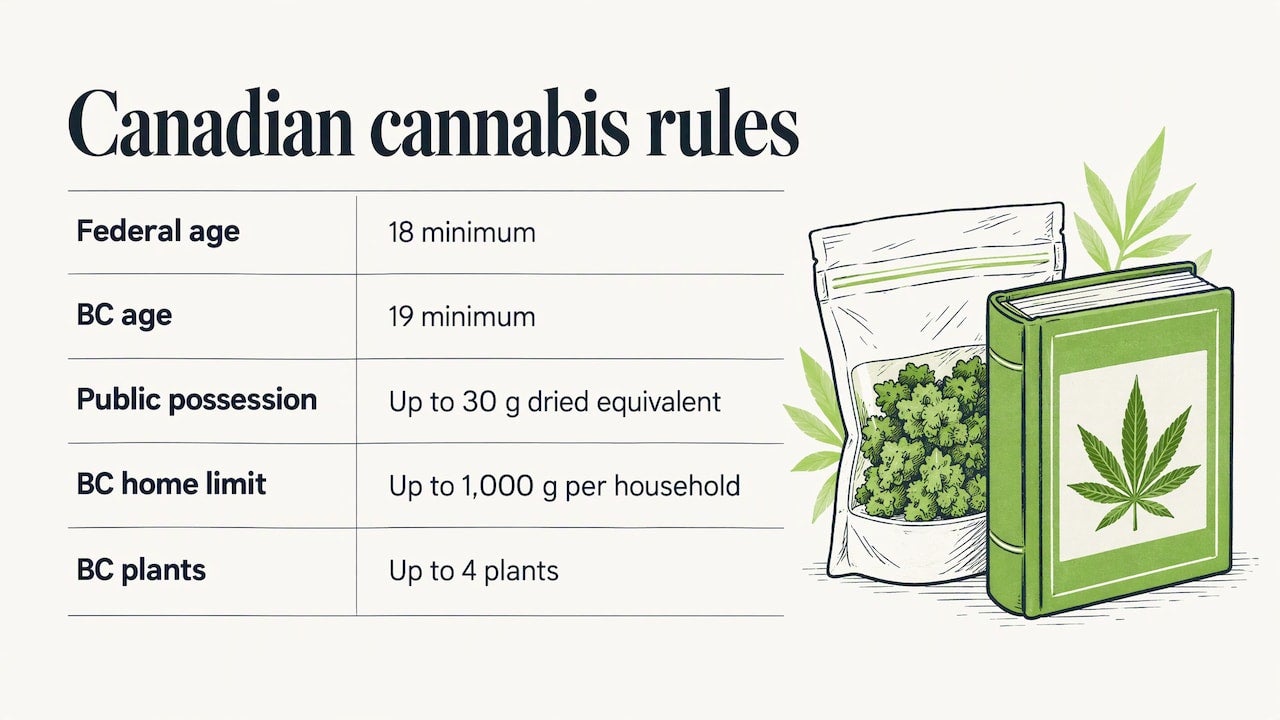
The federal minimum age is 18, but provinces and territories may set a higher age. In British Columbia you must be 19 or older. The federal framework lets adults carry up to 30 grams of legal dried cannabis, or its equivalent, in public.
British Columbia’s government states that adults may possess up to 30 grams in public and up to 1,000 grams at home per household, and may grow up to four plants. It also notes that carrying cannabis in a vehicle is subject to packaging and accessibility rules. Check the provincial page for the rules where you live, as they differ by province.
Health Canada’s warning messages were updated and took effect on March 12, 2025. They cover psychosis, schizophrenia, dependence, anxiety and depression, pregnancy or breastfeeding and impaired driving. Pregnant or breastfeeding people, and anyone with a personal or family history of psychosis, should talk to a doctor before using cannabis.
Keep it occasional
Health Canada’s 2026 guidance states that using cannabis every day or most days can lead to dependence and mental-health challenges, and recommends using it less often. For a beginner that means spacing sessions out, giving yourself days off and noting how you feel afterwards.
Our perspective
New customers often ask us for the strongest option because they assume it means the best value. We see it the other way. A good first order is one where you know exactly what is in the package: the type, the THC and CBD, and the dose per piece.
That is why we put clear categories, user ratings and product pages in front of you, and why our promise is no bunk and no filler. West Coast cannabis culture has always been about knowing what you are getting, and we deliver across Canada in a discreet, fast way so that you can try it at home, in your own time.
Our advice to a first-time buyer: pick one product, check the THC per unit, start small and keep notes. When you know what suits you, mix and match bundles let you add variety without guessing.
the author
Order your first products from East Van Buds
East Van Buds is a Vancouver-based online retailer that delivers discreetly across Canada. The catalogue covers flower, edibles, vapes, concentrates, CBD and topicals and accessories, with user ratings on products so you can compare before you buy. Beginners can start from the main shop or go straight to edibles and look for the lowest THC per unit.
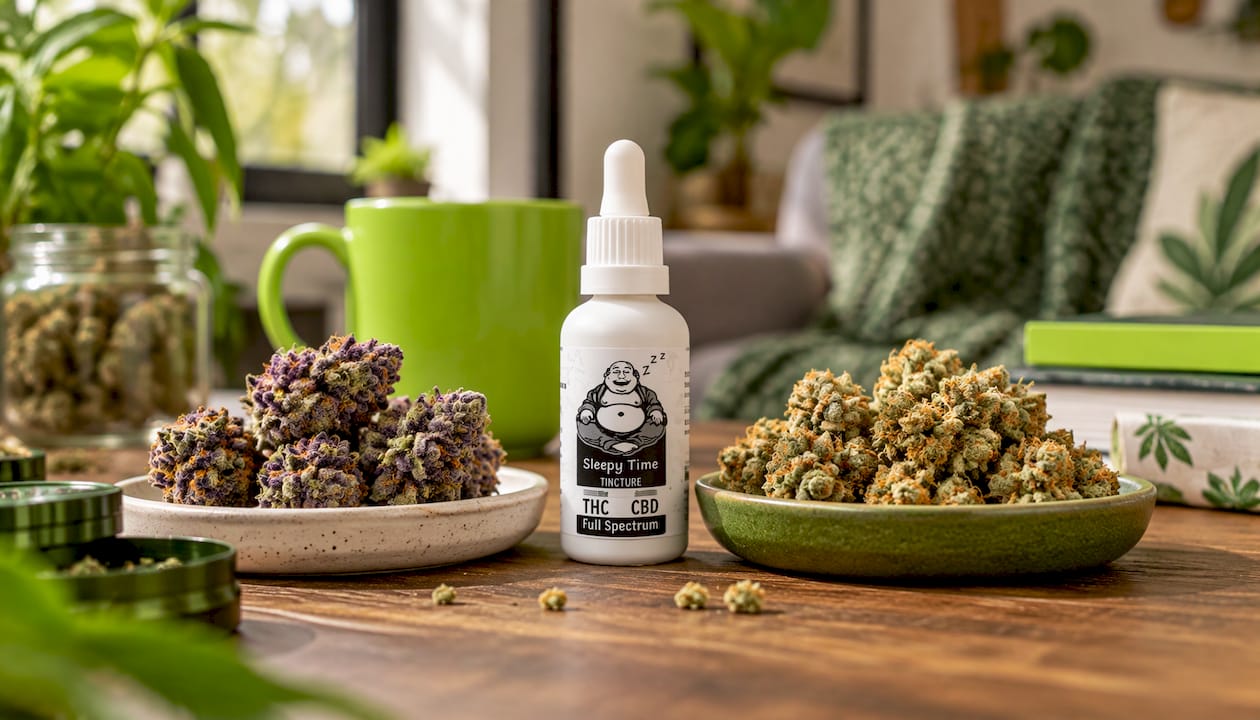
If you want to try several things over time, the bulk category is there for when you know what you like.
FAQ
What is the best cannabis for a beginner?
The best choice is a product with low THC and CBD equal to or higher than the THC, in a form where you can control the dose. Health Canada suggests this combination for new users. In practice that means a low-THC flower with 1 or 2 puffs, or an edible at 2.5 mg of THC or less.
Is a 10 mg edible too much for a beginner?
For most first-timers, yes. Canada’s chief medical officers recommend starting at 2.5 mg of THC or less, so 10 mg is four times that. If a package has several pieces, check the THC per piece and take one.
How long should I wait before taking more?
Wait at least two hours for edibles and ideally up to four, since full effects can take that long. For inhaled cannabis, wait up to 30 minutes. Taking more too early is the usual reason first-time users feel overwhelmed.
Should a beginner smoke indica or sativa?
Either can work. Many people choose indica-labelled products for evenings and sativa-labelled ones for daytime, but the THC and CBD figures on the label tell you more about strength. Start with a low-THC option of either kind and see how you respond.
Can I drive after using cannabis?
No. Plan to stay in until the effects have fully worn off. Edibles can last up to 12 hours, and residual effects can last up to 24 hours according to Health Canada.
Sources
- Health Canada: How to read and understand a cannabis product label
- Health Canada: What you need to know if you choose to consume cannabis
- Health Canada: Cannabis, lower your risks
- Council of Chief Medical Officers of Health statement on cannabis extracts, edibles and topicals
- Manitoba Health: Good and bad experiences with cannabis
- Health Canada recall alert on cannabis edibles and overconsumption
- Government of Canada: Legalizing and strictly regulating cannabis
- Health Canada: Cannabis health warning messages
- Health Canada: Understanding cannabis health effects and how to reduce your risk
Recommended
- Exploring Beyond Expectations: The Definitive Guide to BC’s Finest Cannabis Indica Strains
- Essential Tips for Growing Cannabis at Home
- Unveiling the Mysteries of Cannabis Strains: Your Go-To Guide for Finding the Perfect Match
- Cannabis Hash: Exploring Its Origins, Production, Types, and Consumption Methods